1 oz 2017 30th Anniversary of the Loonie - Common Loon Gold Coin | Royal Canadian Mint
Related products
GORGEOUS! Includes selective platinum plating! Order today!
On June 30, 1987, Canadians were introduced to a new circulation coin. Quickly dubbed "the loonie", the distinctively bronze-coloured, 11-sided coin has become a daily part of Canadian life, even serving as a lucky talisman for Canada's national hockey team.
Thirty years later, it's hard to imagine Canada's one-dollar coin without the solitary loon on its reverse. In truth, it wasn't the original design intended for the coin. Had the original dies not vanished in transit, Canada's one-dollar coin would have featured the Voyageur image that first appeared on a dollar coin in 1935.
COIN HIGHLIGHTS
- A FAITHFUL REPRESENTATION—NOW IN ONE OZ. GOLD! This one-ounce 99.99% pure gold coin is shaped just like the 11-sided circulation piece!
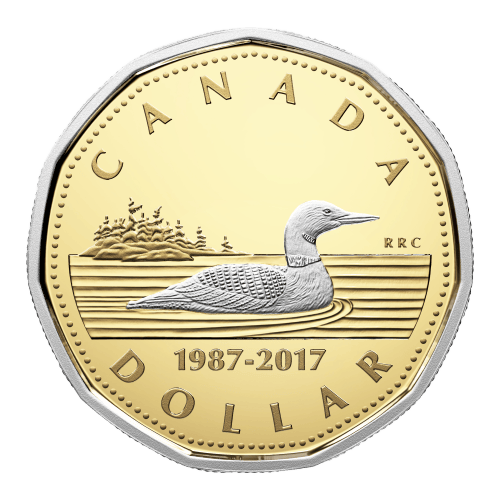
- INCLUDES SELECTIVE PLATINUM PLATING! The coin's design is enhanced by the selective application of platinum plating on both the obverse and the reverse, and struck with special collars to create an 11-sided coin.
- LOW MINTAGE! Limited mintage worldwide of just 350 coins.
DESIGN
The coin features the design by Canadian artist Robert-Ralph Carmichael that has become synonymous with Canada's currency: the iconic side-profile portrait of a common loon on a still lake, where it floats past the Group of Seven-esque trees rising up on a small island behind it. The entire scene is representative of the lakes that dot the Canadian Shield across much of the nation, and includes the engraved words "CANADA" and "DOLLAR", along with the commemorative dates "1987-2017" to mark the 30th anniversary of Canada's $1 circulation coin.
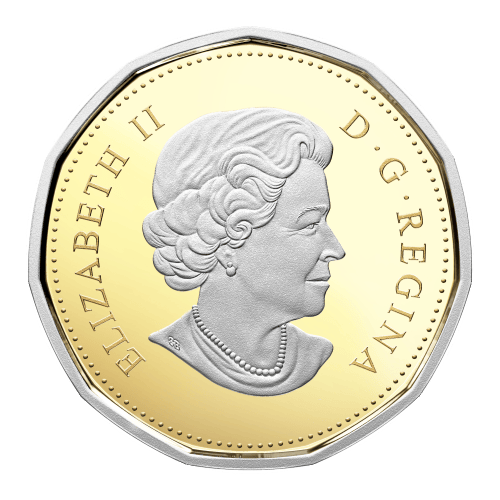
These coins feature the effigy of Her Majesty Queen Elizabeth II by Susanna Blunt on the obverse.
ABOUT THE ROYAL CANADIAN MINT
The Royal Canadian Mint is known as one of the most reputable mints in the world. The Ottawa Branch of the Royal Mint opened in 1908 and was renamed The Royal Canadian Mint in 1931 when control was transferred to the Canadian government. Their high standards for excellence and quality allowed them to be the first refinery to manufacture 9999 fine gold bullion coins in 1982, as well as the first to reach 99999 fine gold purity in 1998.
